

A simple shape that works hard on doors, drawers and cabinets
With a pared-back shape that recalls the striking, abstract geometrics of Art Deco, Bauhaus and Modernist design, half-moon handles introduce a sculptural dimension to an interior scheme. They soften the straight lines of cabinetry and, when used in groups, introduce rhythm to the architecture. We outline everything you need to know about using our half-moon handles by Henry Blake in order to elevate a design.
What is a half-moon handle?
With its symmetrical combination of a straight line and a curve, a half-moon pull handle has a beautifully simple outline. It is also known as a demi-lune or, straightforwardly, a semi-circle, and may sometimes be a half-ellipse, but should not be confused with a crescent. Some design variations come under the same ‘half-moon’ heading like the bisected octagon, or a flower-inspired shape, for example. Two half-moon handles mounted at the same level on a pair of doors will, when the doors are closed, create a complete circle (or an ellipse, octagon or flower): a clever way in which to combine function with striking form.
When to choose a half-moon handle over a knob or pull
Half-moon handles lie close to the surface of a door, drawer or cabinet front and have a large surface area. ‘From a practical point of view, this makes them a good choice when a low-projection handle with significant grip or leverage is required,’ advises Stewart Kent, co-founder of Courtyard. Visually, their appeal is quite different to that of a linear pull handle or edge grip, or a circular knob. The striking, simple curve of a half-moon door handle is both minimal and bold, and has understated, graphic impact. Choose this design when you want to introduce sculptural curves that soften the repeated, straight lines of joinery without taking the hardware in an overly organic or decorative direction.
Choosing the right size half-moon handles
When specifying half-moon handles, consider the dimensions of the door, drawer or cabinet front as they relate to the hardware itself. Because a semi-circular shape carries greater visual weight than a slim bar pull, careful attention to scale, proportion and surrounding negative space is particularly important. Think about how half-moons will read when installed as a pair, and the way in which repeated handles will create rhythm across a run of cabinetry. Before making a final decision, mark the proposed dimensions directly onto the door or drawer, or use a physical sample to assess the proportions. View the results from both close range and further away. If you are using more than one pair of half-moon handles, the decision is whether to opt for a single size which, repeated throughout a scheme, establishes a pleasing consistency, or to deliberately vary dimensions in order to create movement and emphasis. ‘Function should guide your decision, too,’ says Stewart. ‘Two smaller half-moon pulls will give balanced leverage on a wide drawer, while larger half-moons are more appropriate for tall doors, for sufficient grip as well as proportionate visual weight.’

How do fixings work on half-moon handles?
Half-moon handle fixings are usually concealed in order to avoid interrupting their sculptural form. Check centre-to-centre measurements carefully, as the fixing points may not be as obvious as they are with bar-shaped pulls.
Why surface texture and finish are so important
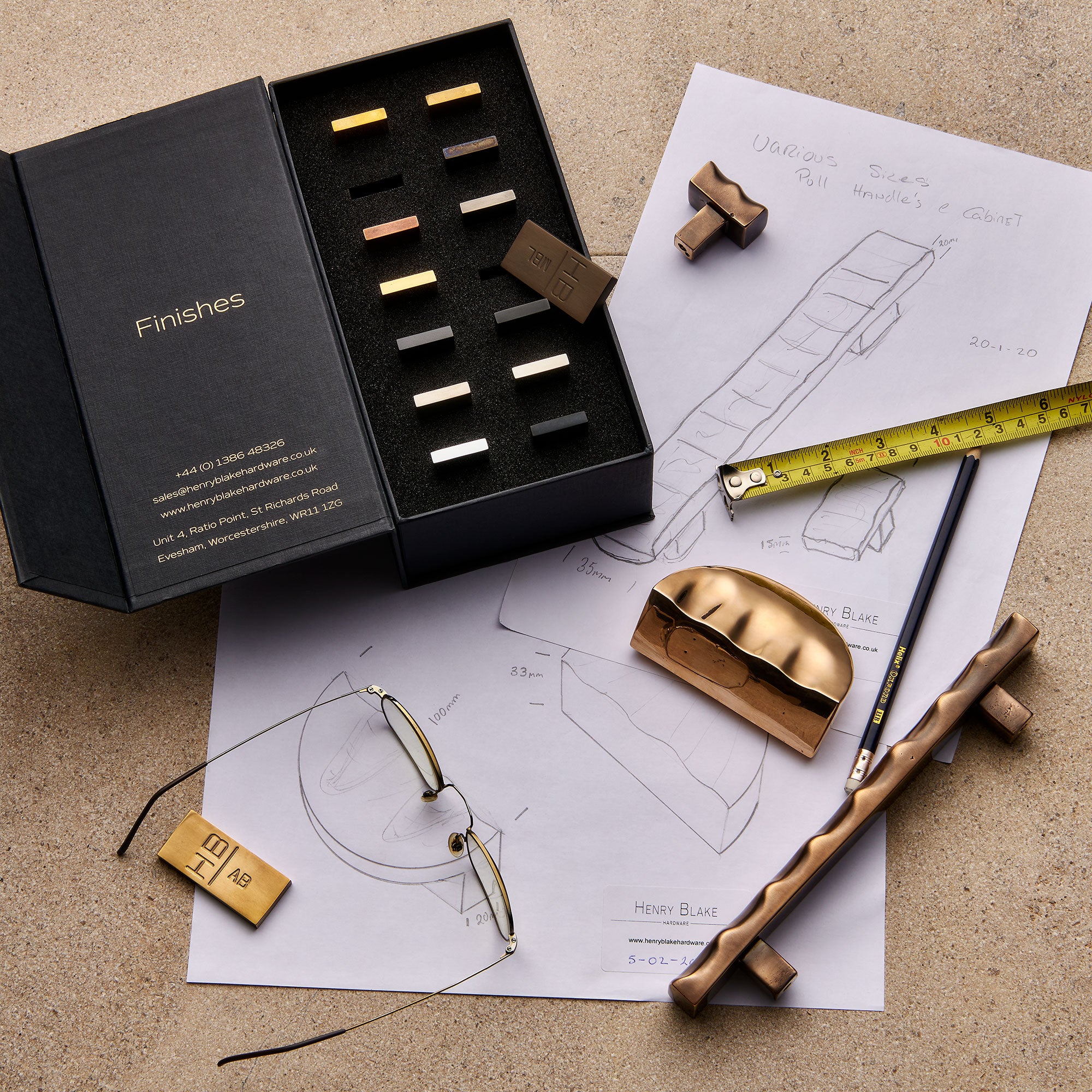
Take two half-moon handles with the same dimensions: depending on their finish and surface texture, they can appear markedly different. A hand-hammered surface gives a sense of rugged character, while a polished surface appears sleek and sophisticated, emphasising the clean lines of the half-moon shape; sand-cast metal is organic and informal, with delightful imperfections, while a matt black finish is minimal, crisp and undeniably modern. Consider how light is reflected by brushed, satin, polished or aged finishes, and also how the quality of each surface is appreciated through touch, as well as visually. Handle finish also relates to paint colours, joinery and other metal details such as light fittings or taps, whether deliberately matched or carefully contrasted. Unlacquered, living finishes offer another dimension, gradually responding to both their environment and day-to-day handling to develop a unique patina. ‘A simple, half-moon form in a living finish is both sculptural and tactile, and the aging process, far from being problematic, is all part of its appeal,’ says Stewart.
Where to use half-moon handles
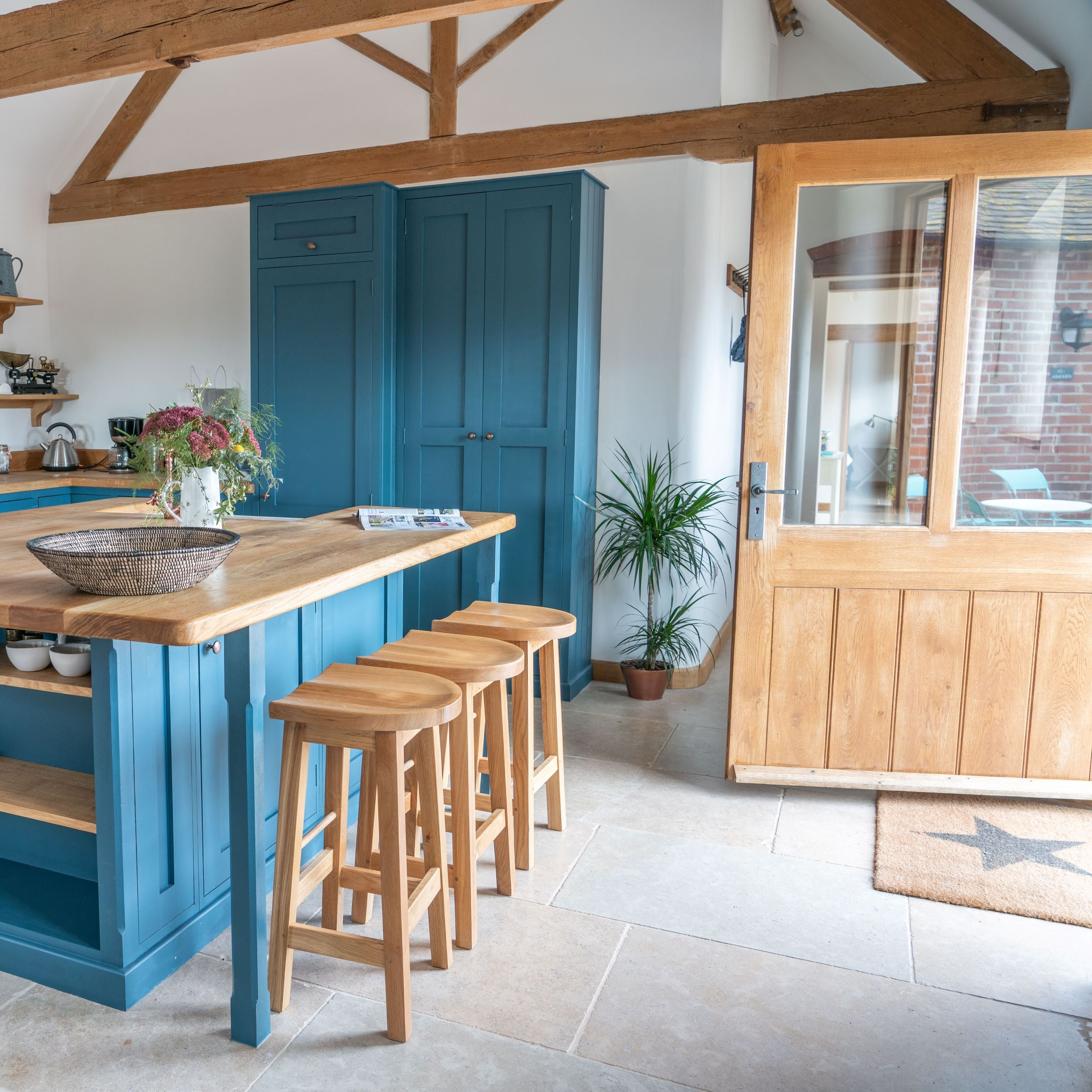
Play them up or down according to their finish, surface texture and size: half-moon handles can be surprisingly versatile, and will suit a variety of schemes. In a brushed, smooth finish they work especially well with modest, Shaker-style cabinetry, while a high-shine finish can complement modern, flat-fronted cupboards, adding just enough design detail without becoming overbearing. Warm metals with obvious texture will elevate vintage-inspired schemes or a traditionally styled interior in which you wish to nod to Art Deco or Modernist influences. From hotel lobbies to hallways, contemporary kitchens to traditional studies, half-moon handles add subtle character and craftsmanship, and reinforce an authentic feeling of quite luxury.

Half-moon handles from our Henry Blake range are in stock and available on trade account. Call the team or visit the Evesham trade counter to check sizes and finishes, or register for a trade account to order online.